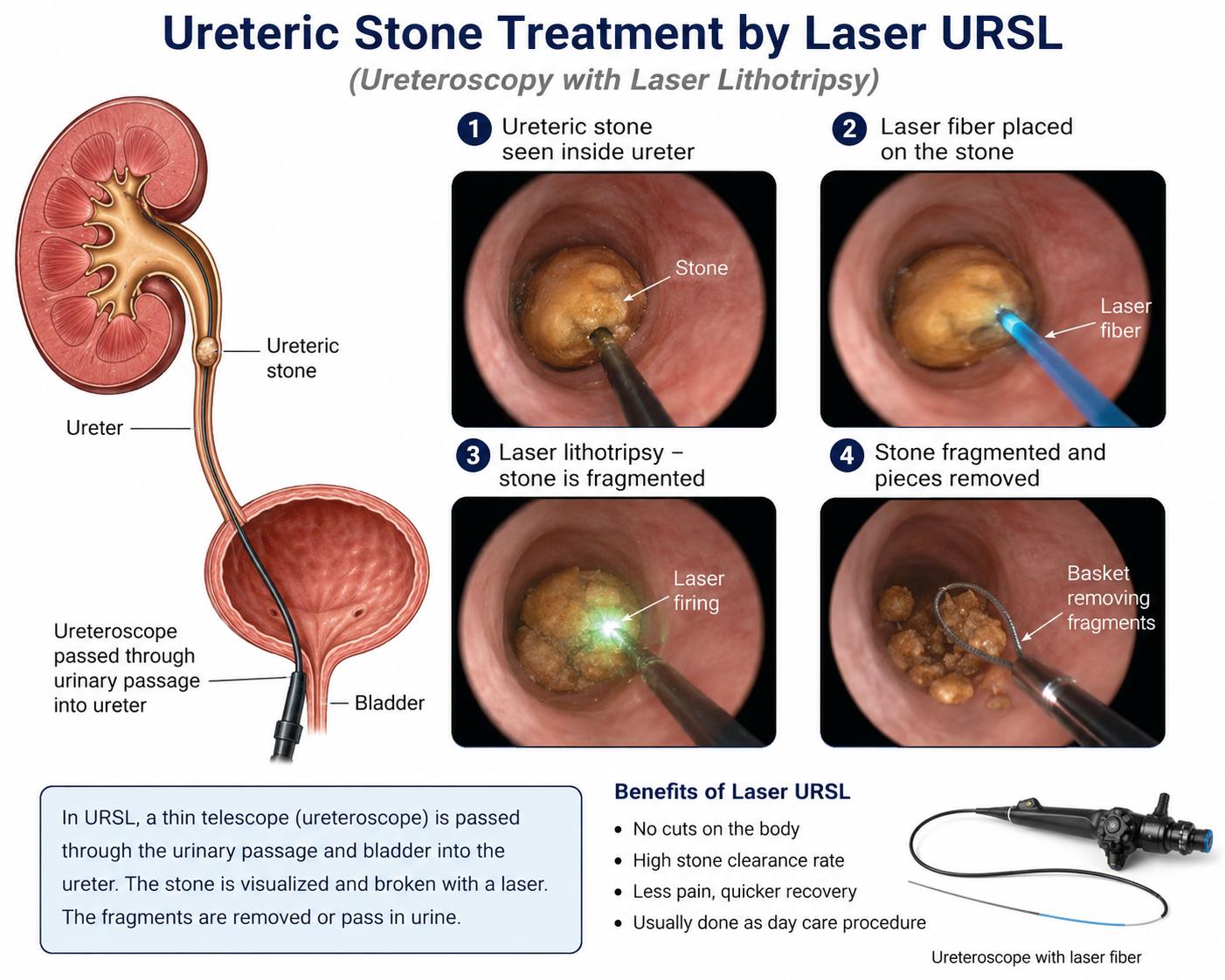
What is a ureteric stone?
A ureteric stone is a hard deposit made of minerals and salts that forms in the kidney and moves into the ureter (the tube that carries urine from the kidney to the bladder). As the stone travels, it may block urine flow and cause severe pain.
Common Symptoms
-
- Sudden, severe pain in the side (flank), back, or lower abdomen
-
- Nausea and vomiting
-
- Blood in the urine (pink, red, or brown urine)
-
- Burning or pain while passing urine
-
- Difficulty passing urine if the stone blocks the ureter
Seek Emergency Medical Care Immediately If You Have:
- Fever (≥38°C) or chills
- Severe pain not relieved by medicines
- Unable to pass urine
- Persistent vomiting and inability to drink fluids
- One functioning kidney or known kidney disease with severe pain
- Pregnancy with severe pain
- Increasing weakness, dizziness, or confusion
Treatment
> 1. Small Stones (Usually Less Than 5–6 mm)
- Most small stones pass naturally.
- Pain-relieving medicines
- Medicines that help the stone pass (such as tamsulosin, if appropriate)
- Drinking enough fluids to stay hydrated
- Straining urine to collect the stone if advised
> 2. Larger Stones or Stones That Do Not Pass (>7mm)
Ureteroscopy (URSL): A small telescope is passed through the urinary passage to remove or break the stone with a laser.
RIRS: For upper ureteric calculi, Pelviureteric calculi, Ureteric calculi with kidney stone
Preventing Future Stones
- Drink enough water to produce at least 2–2.5 litres of urine daily.
- Reduce salt intake.
- Eat a balanced diet with normal calcium intake (do not stop calcium unless advised).
- Limit excessive animal protein.
- Reduce sugary soft drinks.
- Eat more fruits and vegetables.
- Maintain a healthy body weight.
If you have recurrent stones, your doctor may recommend a metabolic evaluation and stone analysis.
Frequently Asked Questions
> Will the stone pass on its own?
Many stones smaller than 5 mm pass naturally within a few weeks. Wait for 2 weeks for stone to pass naturally. Larger stones are less likely to pass without treatment. Its better to seek treatment for larger ureteric calculi
> Can stones come back?
Yes. Without preventive measures, many people develop another stone within several years.
> Can I work during treatment?
Most people can continue light activities as tolerated, but severe pain may require rest.
> Do I need surgery?
Many stones pass naturally. Surgery or other procedures are recommended only when necessary.
Follow-Up
Please return for follow-up as advised. Even if your pain improves, a stone may still be present and require confirmation with imaging.
Contact:
Dr. Arun Shah
MCh Urology
National Urology Center, Janakpur
9744427743