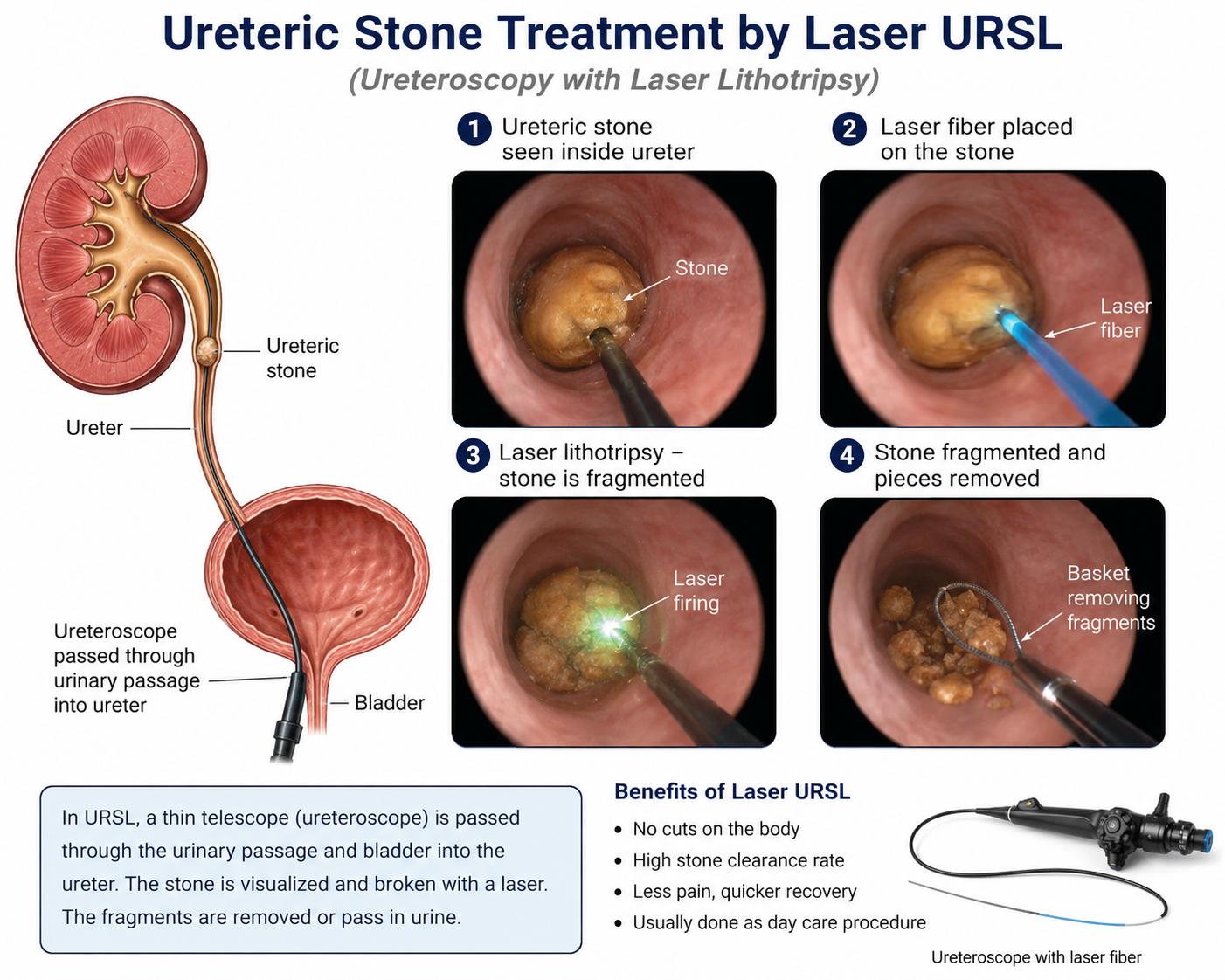
What is a Ureteric Stone?
A ureteric stone is a hard deposit made of minerals and salts that forms in the kidney and becomes lodged in the ureter—the tube that carries urine from the kidney to the bladder. The stone may partially or completely block the flow of urine, causing severe pain and other symptoms.
What is Laser URSL?
Laser URSL (Ureteroscopic Laser Lithotripsy) is a minimally invasive procedure used to remove or break ureteric stones. It is performed without any skin incision.
A thin telescope called a ureteroscope is passed through the natural urinary passage (urethra), into the bladder, and then into the ureter. A laser fibre is used to break the stone into tiny fragments, which are removed with a small basket or allowed to pass naturally in the urine.
Who Needs Laser URSL?
- [ ] A ureteric stone that is unlikely to pass naturally (> 7 mm)
- [ ] Persistent severe pain despite medication.
- [ ] A stone causing blockage of the kidney.
- [ ] Recurrent urinary tract infections due to the stone.
- [ ] Reduced kidney function caused by the stone.
- [ ] A stone that has not passed after a period of observation or medications.
- [ ] Failure of previous treatment.
Benefits of Laser URSL
- [ ] No cuts or surgical scars.
- [ ] High stone clearance rate.
- [ ] Less pain after surgery.
- [ ] Minimal blood loss.
- [ ] Short hospital stay (often same day or overnight).
- [ ] Faster recovery and early return to normal activities.
The procedure usually takes 30–90 minutes, depending on the size and location of the stone.
Most patients go home the same day or the following day.
Preventing Future Stones
- [ ] Drink enough water to produce at least 2–2.5 litres of urine daily.
- [ ] Reduce salt intake.
- [ ] Eat a balanced diet with normal calcium intake.
- [ ] Limit excessive animal protein.
- [ ] Maintain a healthy body weight.
- [ ] Eat more fruits and vegetables.
If you have recurrent stones, your doctor may recommend stone analysis and metabolic evaluation.
Frequently Asked Questions
Will I have any cuts or stitches?
No. Laser URSL is performed through the natural urinary passage, so there are no external cuts or stitches. Surgery is usually blood less.
How successful is Laser URSL?
Laser URSL has a very high success rate for ureteric stones.
When can I return to work?
Most people can return to office work within 3–7 days. Those with physically demanding jobs may need a longer recovery period.
Will I feel the DJ stent?
Some patients experience urinary frequency, urgency, mild flank pain, or blood in the urine while the stent is in place. These symptoms usually improve after the stent is removed.
When will my DJ removed?
DJ stent is usually removed after 2 - 6 weeks after surgery.
Laser URSL is a safe and effective treatment for ureteric stones. Following your doctor's advice, taking your medications, drinking plenty of fluids, and attending follow-up appointments will help ensure a smooth recovery and reduce the risk of future stone formation.
Contact:
Dr Arun Shah
MCh Urology
National Urology Center, Janakpur
9744427743